






Peru Is Quietly Building a Footwear Supply Chain — And Its 15th Trade Fair Proves It
While the industry’s attention stays fixed on Milan, Shanghai and Ho Chi Minh City, a trade fair in Lima is about to hold its fifteenth edition. That number is the story.
Expo Detalles Perú 2026 runs from 12 to 14 August at the Jockey Plaza Convention Centre, bringing together suppliers of materials, leather, soles, accessories, machinery, technology and production solutions for the footwear industry.
Fifteen editions means this event has survived a commodity boom, a pandemic, a wave of Asian import competition and several changes of government. Trade fairs are ruthless indicators of sector health — they die quickly when the businesses that fill them stop existing. That Expo Detalles has reached its fifteenth year says something durable about Peruvian footwear manufacturing.
What the Fair Actually Does
Over three days, attendees can visit exhibitor stands, discover new products, develop business contacts, compare suppliers and identify solutions to improve manufacturing and commercialisation processes.
“The aim of Expo Detalles Perú 2026 is to continue strengthening the production chain of the footwear industry by creating a space where suppliers and manufacturers can connect, conduct business and develop new opportunities for the sector,” the organisation stated.
The target audience is deliberately broad: footwear manufacturers, business owners, entrepreneurs, students, designers, technicians and retailers.
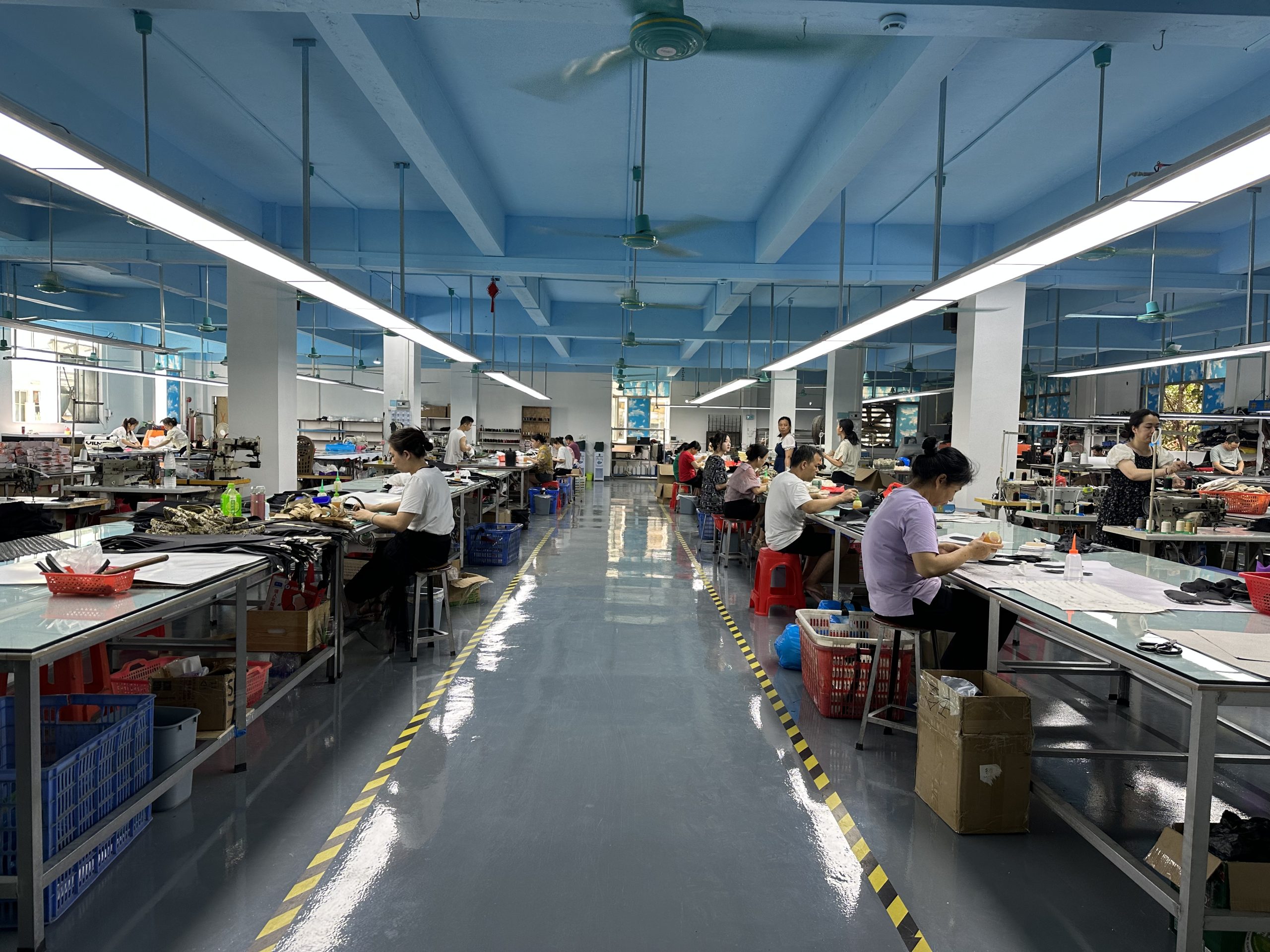
That mix — students and technicians alongside owners and buyers — is characteristic of trade fairs serving fragmented manufacturing bases rather than consolidated ones. Where a handful of large factories dominate, fairs become purely commercial. Where hundreds of small and medium workshops make up the sector, fairs become part marketplace, part training ground, part industry gathering.
Peru’s footwear industry is firmly in the second category, and it explains why an event focused on components and machinery matters more there than a finished-product showcase would.
Why Component Fairs Matter More Than Product Fairs
There is a reason the organisers emphasise materials, soles, machinery and technology rather than collections.
Small footwear manufacturers do not usually fail because they cannot design a shoe. They fail because they cannot access the right leather in the right quantity at the right price, because their machinery is a generation behind, or because they do not know which sole supplier can meet a particular technical specification. Those are supply-chain problems, and they are solved by physical proximity to suppliers far more effectively than by catalogues or websites.
A workshop owner in Trujillo or Arequipa who spends three days comparing sole suppliers and seeing machinery demonstrated in person walks away with capabilities that were previously invisible. Multiply that across a few thousand attendees and the aggregate effect on a national manufacturing base is meaningful — slow, unglamorous, but real.
The Regional Context
Peru sits in an interesting position within South American leather and footwear. It has a domestic cattle and camelid base, a long artisanal tradition, and a manufacturing sector oriented largely toward domestic and regional demand rather than global export.
That inward orientation has historically been treated as a weakness. In 2026, it looks more like insulation. Producers serving domestic markets have been notably less exposed to the tariff volatility, freight cost swings and order cancellations that have battered export-dependent manufacturers in Asia. When global footwear production is broadly flat and major brands are cutting purchase volumes, a supply chain built around local demand has a certain quiet resilience.
The trade-off is scale. Domestic-focused sectors rarely develop the volume efficiencies or technical sophistication that export competition forces. This is precisely the gap a machinery and technology fair exists to close.
What This Means for International Suppliers
For European and Asian suppliers of tanning chemicals, finishing equipment, cutting technology and sole components, secondary markets like Peru are becoming more interesting rather than less.
The mature markets are consolidating and shrinking. The large Asian manufacturing hubs are already served by entrenched supplier relationships and increasingly by domestic competition. Growth, where it exists, is in the mid-sized manufacturing economies that are upgrading from artisanal to semi-industrial production and need equipment, know-how and reliable material supply to do it.
A fifteen-year-old fair in Lima with a stable exhibitor base is exactly the kind of unspectacular opportunity that gets overlooked in favour of larger, more crowded venues.
The Broader Point
The global footwear conversation is dominated by quarterly results from a dozen listed brands. It is easy to forget that most of the world’s shoes are made by companies nobody has heard of, buying components from suppliers nobody profiles, in countries that rarely appear in the trade press.
Expo Detalles Perú will not move a single share price. But for the manufacturers walking its aisles this week, it is where next year’s production capability gets decided.
Details are available on the event website.
Source: World Footwear
TL;DR
Peru Is Quietly Building a Footwear Supply Chain — And Its 15th Trade Fair Proves It While the industry’s attention stays fixed on Milan, Shanghai and Ho Chi Minh City, a trade fair in Lima is about…
Frequently Asked Questions
2?
Peru Is Quietly Building a Footwear Supply Chain — And Its 15th Trade Fair Proves It While the industry’s attention stays fixed on Milan, Shanghai and Ho Chi Minh City, a trade fair in Lima is about to hold its fifteenth edition.
2?
Peru Is Quietly Building a Footwear Supply Chain — And Its 15th Trade Fair Proves It While the industry’s attention stays fixed on Milan, Shanghai and Ho Chi Minh City, a trade fair in Lima is about to hold its fifteenth edition.
2?
Peru Is Quietly Building a Footwear Supply Chain — And Its 15th Trade Fair Proves It While the industry’s attention stays fixed on Milan, Shanghai and Ho Chi Minh City, a trade fair in Lima is about to hold its fifteenth edition.
2?
Peru Is Quietly Building a Footwear Supply Chain — And Its 15th Trade Fair Proves It While the industry’s attention stays fixed on Milan, Shanghai and Ho Chi Minh City, a trade fair in Lima is about to hold its fifteenth edition.
Key Takeaways
Peru Is Quietly Building a Footwear Supply Chain — And Its 15th Trade Fair Proves It While the industry’s attention stays fixed on Milan, Shanghai and Ho Chi Minh City, a trade fair in Lima is about to hold its fifteenth edition. The implications extend across the leather, tannery, and footwear value chain—signals that buyers, suppliers, and investors should track closely.
Related Articles
- AEC Sounds the Alarm: Spain’s Footwear Supply Chain Is Quietly Falling Apart
- Adidas Expands India Footwear Production: A Strategic Shift with Implications for the Global Supply Chain
- Brazil’s Footwear Trade Paradox: Imports Surge While Exports Stall — and the Numbers Tell a Worrying Story

中文