 中文
Mongolia Confronts Its Chemical Problem: UNDP and Government Push Greener Leather and Cashmere Supply Chains
Mongolia’s leather and cashmere sectors sit atop one of the world’s largest raw material bases — tens of millions of hides and skins produced annually from a livestock population that dwarfs the country’s human one. Yet the industries built on that base have long carried an uncomfortable secret: hazardous chemicals, weakly managed, flowing through the supply chain from tannery drums to rivers. A technical consultation held in Ulaanbaatar on September 2 signalled that the country’s government and its international partners are done treating that as an acceptable cost of doing business.
The consultation was convened by Mongolia’s Ministry of Food, Agriculture and Light Industry (MOFALI) together with the United Nations Development Programme, and it gathered an unusually broad cross-section of the value chain: government officials, industry representatives, academics and technical experts, including the Mongolian Leather Industry Association. The subject was chemicals management and the path toward greener supply chains in both the leather and cashmere sectors — two industries that together anchor much of Mongolia’s non-mineral export ambition.
The Technical Agenda Is Real
This was not a ceremony. The discussions covered safer chemicals management, circular economy practices, green materials, chemical inventories and life-cycle assessments — the full toolkit that international buyers now increasingly demand as evidence, not aspiration. Participants also examined opportunities to reduce chemical risks, introduce cleaner production technologies and strengthen technical capacity within the two industries.
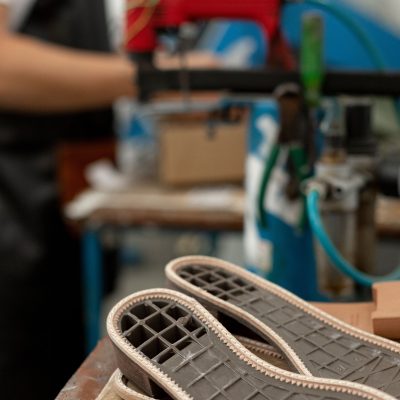
A key focus was reducing the use of hazardous chemicals and expanding safer, more resource-efficient alternatives. Factory engineers, researchers and industry representatives contributed practical insights on production processes, chemical use and technology requirements — a level of granularity that distinguishes genuine capacity-building from awareness-raising events. Anyone who has walked through a small tannery in Ulaanbaatar knows why this matters: chrome tanning, solvent-based finishing and informal chemical handling remain widespread, and wastewater treatment is inconsistent at best.
The Project Behind the Meeting
The consultation was organised under the Global Environment Facility-funded project “Eliminating Hazardous Chemicals from Supply Chains in Mongolia,” implemented by MOFALI with UNDP support and running from 2025 to 2030. That five-year horizon is important. Chemical management transformation in emerging-market manufacturing does not happen in workshop cycles; it requires sustained investment in testing infrastructure, operator training, and regulatory enforcement — and GEF funding of this scale gives Mongolia a runway that most of its regional peers lack.
The timing is also commercially strategic. Mongolia’s cashmere industry has spent a decade building traceability and sustainability credentials to defend premium positioning against Chinese competition. The leather sector now faces the same logic: European and North American brands sourcing leather are progressively requiring chemical compliance frameworks — ZDHC-aligned restricted substance lists, wastewater testing, audited chemical inventories. A producer country that cannot demonstrate chemical governance will be progressively relegated to lower-value, less regulated markets, whatever the quality of its raw material.
From Consultation to Enforcement
The honest caveat is that Mongolia has hosted sustainability consultations before. What will separate this cycle from previous ones is execution: whether chemical inventories actually get built at facility level, whether safer alternatives are validated and demonstrated in real Mongolian production conditions, and whether the country’s environmental inspection capacity grows alongside industry awareness.
There are reasons for cautious optimism. The leather and cashmere industries are concentrated enough that a relatively small number of facilities cover a large share of output. MOFALI’s ownership of the project places it inside the ministry that regulates the sector rather than in an environmental agency with limited industrial reach. And the inclusion of factory engineers in the consultation — rather than only officials and NGO representatives — suggests the programme is grounded in production reality.
For a country whose leather sector has historically exported semi-processed material and watched others capture the value-added margin, cleaner chemistry is not just an environmental obligation. It is the entry ticket to the certified supply chains where the money is. The Ulaanbaatar consultation was a starting line, not a finish line — but it is the right starting line, with the right institutions at the table and five years of funding behind it.
Source: MOFALI / UNDP via Leather News