 中文
Zambia Wants 20 Leather Clusters. It Still Needs the Tannery in the Middle
Zambia has set itself a specific and measurable industrial ambition: shift from exporting raw hides and skins to manufacturing finished leather products at home, and do it through a network of small-business clusters. The Ministry of Commerce, Trade and Industry is targeting the establishment of 20 footwear and leather goods SME clusters, intended to improve hide and skin quality and encourage local processing.
The plan is laid out in the Zambia Leather Value Chain Strategy, aligned with the government’s 8th National Development Plan (8NDP). It is a serious document with a coherent logic. Whether it survives contact with the sector’s actual constraints is the question that matters.
The diagnosis is honest
Kasonde Mwamba, founder and managing director of Kasem Travise Enterprises Limited and a member of the Zambia Leather Industries Association (ZALIA), gave the Times of Zambia a diagnosis that pulls no punches. The industry has historically faced illegal exports of raw hides and skins, poor hide quality, limited tannery capacity and a shortage of trained professionals.
That is the correct list, and it is worth noting how rarely all four are named together. Most developing-market leather strategies pick one — usually finance, sometimes skills — and treat the others as downstream problems. Zambia’s stated constraints describe a value chain broken at every link simultaneously. Illegal raw exports remove the feedstock. Poor hide quality means what remains is worth less. Limited tannery capacity means even good hides cannot be converted. A skills shortage means the conversion, where it happens, produces lower-value output.
Any one of these can be fixed with money. All four at once requires sequencing, and sequencing requires a decision about which link to anchor.
Clusters without a middle
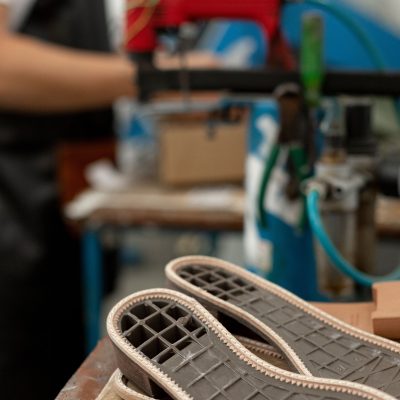
The cluster model is the centrepiece. Small manufacturers would share facilities, equipment and market links, reducing production costs, improving quality and strengthening competitiveness.
Shared equipment is a proven mechanism. It works in Indian footwear clusters, in Italian districts, in Mexican leather towns. But it works when there is a reliable flow of compliant material moving into the cluster and a reliable route to market moving out. A cluster of 40 workshops sharing a clicking press and a stitching line is still a cluster of 40 workshops if the leather arriving at the gate is inconsistent in thickness, colour and temper.
This is where Zambia’s plan meets its hardest problem. Tannery capacity is explicitly listed as limited, and no number of SME clusters substitutes for it. Clusters consume finished or at least crust leather. Without an anchor tannery producing to consistent specifications — and enough of it — the clusters will import their material or run below capacity on whatever the informal market supplies.
Skills and finance are the softer constraints
The skills agenda is being supported by the Africa Leather and Leather Products Institute (ALLPI) and the Ministry of Small and Medium Enterprise Development, with training in footwear manufacturing, leather goods design and craftsmanship. Partnership with COMESA is also in play.
Training is the cheapest intervention available and the one most likely to show early results. A cluster with a functioning training programme produces better goods within a year. But training without machinery, and machinery without material, produces trained people who leave for South Africa, Botswana or overseas — the classic leakage that has drained several African leather programmes.
Access to finance remains the binding constraint for equipment upgrades. Mwamba’s point is precise: affordable working capital would let tanneries and workshops upgrade equipment and expand production. Working capital, not grant capital, is the right ask. Tanneries die from cash cycle mismatches — buying hides seasonally, selling leather quarterly — far more often than from a lack of machinery subsidies.
The market side is genuinely promising
The export architecture Zambia is targeting is credible. The African Continental Free Trade Area (AfCFTA) opens regional tariff preferences at a scale that did not exist five years ago. The COMESA regional market is an established outlet. AGOA provides duty-free access to the United States for eligible goods.
Three routes, three different customer profiles. AfCFTA and COMESA reward volume and price competitiveness in footwear and bags. AGOA rewards compliance — and this is the route that punishes weak traceability hardest. A Zambian cluster that cannot document hide origin to farm level will not clear a US buyer’s audit, no matter how good the stitching is.
That is the argument for building traceability into the cluster programme from day one rather than retrofitting it. It is also the argument for treating Zambia’s illegal raw-export problem as a compliance issue and not merely an economic one. Every hide that leaves the country informally represents lost value and an unrecorded link in a chain that Western buyers increasingly demand to see in full.
The verdict
Twenty clusters is an ambitious number and it should be read as an organising target rather than a construction schedule. What will determine success is not the count but whether Zambia can anchor the missing middle of its value chain: a tannery, or a small group of them, capable of supplying consistent material at prices that let cluster workshops compete on more than novelty.
Get that right and the clusters become the country’s route into AfCFTA and AGOA. Get it wrong and Zambia will have built 20 well-equipped workshops that import their leather — which is a more expensive way of remaining a raw material exporter.
Source: Leather News (leathernews.org), reporting comments by Kasonde Mwamba of ZALIA to the Times of Zambia