 中文
中文
.

03.

-
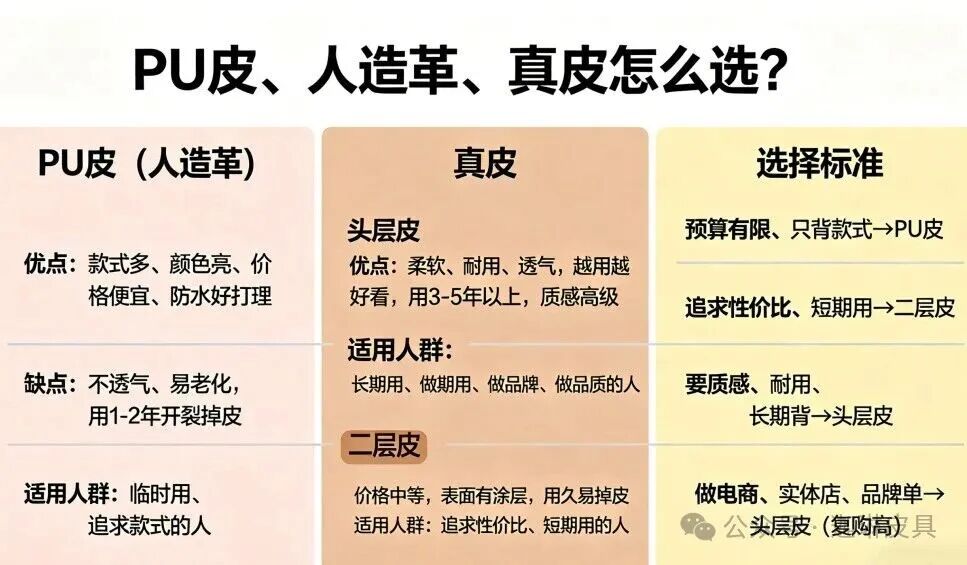
Limited budget, only considering style → PU leather
-
Pursuing cost-effectiveness, short-term use → Split leather
-
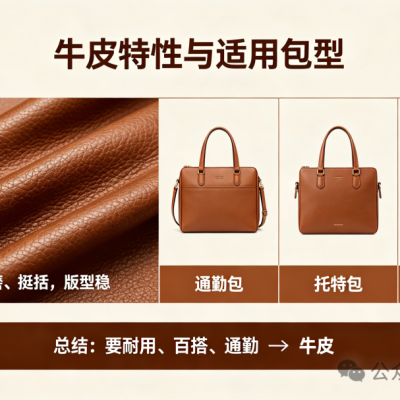
Seeking texture, durability, and long-term use → Full-grain leather
-
E-commerce, physical stores, brand orders → Full-grain leather (high repeat purchase) 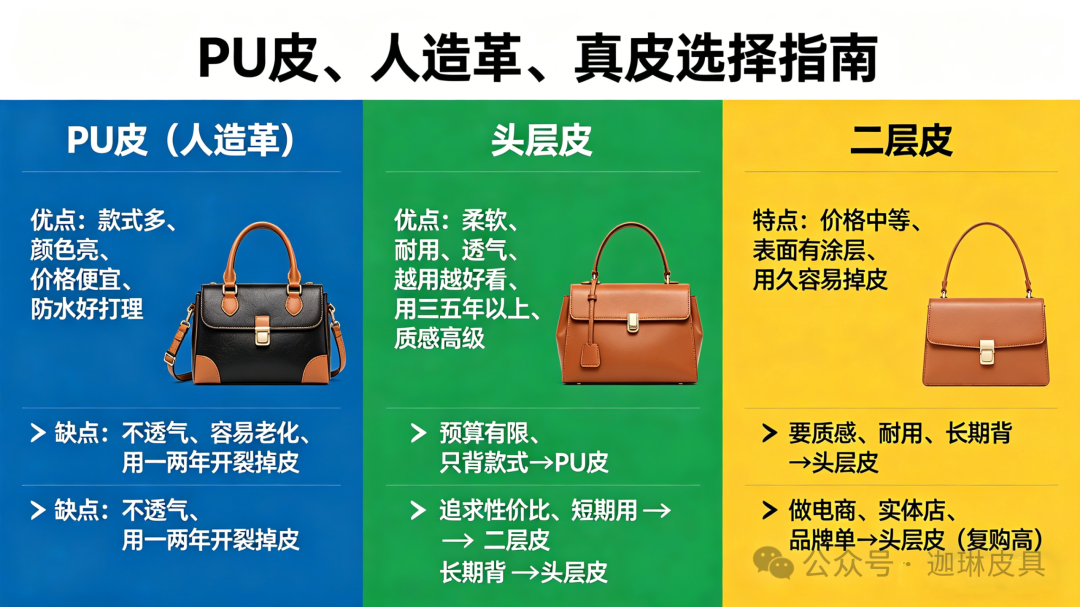
TL;DR
Hello everyone, I am the former factory manager of Galan Leather Goods. Many people struggle when buying bags: PU, synthetic leather, or genuine leather?
Frequently Asked Questions
What is the key development covered in this article?
Hello everyone, I am the former factory manager of Galan Leather Goods.
Why does this matter for the leather and footwear industry?
Today, I will clarify it all at once.
What should buyers, suppliers, and investors watch next?
Follow me, and I’ll teach you to understand leather goods better and spend less money unnecessarily.
Key Takeaways
Hello everyone, I am the former factory manager of Galan Leather Goods. The implications extend across the leather, tannery, and footwear value chain—signals that buyers, suppliers, and investors should track closely.
Related Articles
- A piece of genuine leather has to pass 8 checks! This is a real-life video showing how strict our factory’s quality control is
- The AI Robot Tannery: How Artificial Intelligence Is Reshaping Leather Manufacturing
- Gemata CEO Giulio Mandruzzato: How AI and Automation Are Rewriting the Rules of Leather Finishing