 中文
中文Uzbekistan Bets $30 Million on Leather’s Industrial Comeback
Central Asia rarely makes headlines in the global leather trade. That may be about to change — and in a substantial way.
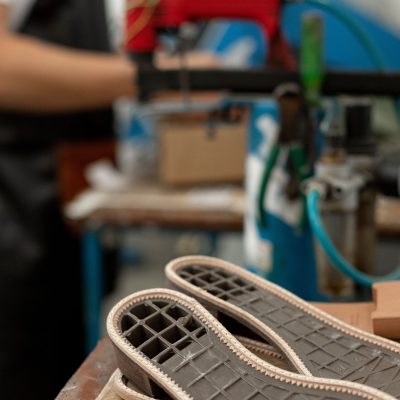
On July 1, Uzbekistan’s President Shavkat Mirziyoyev signed a sweeping resolution that amounts to the most ambitious government intervention in the country’s leather and footwear sector in recent memory. The package combines direct subsidies, tax exemptions, infrastructure investment, and skills development into a coordinated push to transform Uzbekistan from a raw material exporter into a finished goods manufacturing powerhouse.
The targets are nothing if not bold. By 2027, leather production is set to climb from 690 million square decimetres to 800 million, while footwear output should jump from 100 million pairs to 115 million. Exports — currently hovering around $110 million — are projected to reach $150 million. These are not incremental gains; they represent a fundamental re-scaling of the industry.
The financial mechanics behind these ambitions are equally striking. The government will allocate 360 billion soums — roughly $30 million — from the state budget over 2026 and 2027 for modern wastewater treatment facilities serving leather and wool enterprises in the Tashkent and Syrdarya regions. An additional 80 billion soums ($6.68 million) will fund external engineering and communications infrastructure for industrial zones. For a country where leather has historically played second fiddle to cotton and natural gas, these figures signal a decisive strategic pivot.
The subsidy structure reveals a government thinking carefully about incentives. Finished leather producers will receive 350 soums ($0.029) for every square decimetre sold. Footwear manufacturers get one million soums ($83.50) for each newly developed model, capped at 50 million soums per enterprise annually. There is even a targeted provision for importing shoe lasts and moulds, with the government covering 50% of costs — up to $10,000 annually for EU-sourced equipment.
Perhaps most significantly, the resolution establishes a new institutional architecture. A Directorate for the Management of Leather and Footwear Industrial Zones has been created as a limited liability company with $23 million in charter capital. Two existing industrial zones covering 43.5 hectares in Akhangaran and Shahrihan districts will transfer to this directorate, giving it real operational heft rather than just a bureaucratic mandate.
The tax relief provisions are equally aggressive. Entrepreneurs collecting leather and wool raw materials receive a three-year exemption from corporate income tax, property tax, land tax, and VAT — a near-total tax holiday designed to professionalise the raw material supply chain, which remains fragmented and inefficient across much of Central Asia.
The skills dimension should not be overlooked. Starting October 2026, the Light Industry Agency and the Uzbek-Korean Training and Practical Technopark will launch continuous professional development programmes covering fashion designers, marketers, and technologists — with foreign instructors providing expertise. This addresses what may be the binding constraint on Uzbekistan’s ambitions: a shortage of trained personnel capable of operating at international quality standards.
The question, as always with grand industrial strategies, is execution. Subsidies attract; sustained competitiveness retains. The government’s willingness to commit real fiscal resources — $33 million in total, with a ten-year, 5% interest financing window for investment projects — suggests this is more than a press release exercise. For a region hungry for manufacturing success stories, Uzbekistan’s leather experiment deserves close watching.
Source: https://leathernews.org/uzbekistan-president-mirziyoyev-approves-financial-support-package-to-boost-leather-and-footwear-sector/
TL;DR
Uzbekistan Bets $30 Million on Leather’s Industrial Comeback Central Asia rarely makes headlines in the global leather trade. That may be about to change — and in a substantial way.
Frequently Asked Questions
What is the key development covered in this article?
Uzbekistan Bets $30 Million on Leather’s Industrial Comeback Central Asia rarely makes headlines in the global leather trade.
Why does this matter for the leather and footwear industry?
On July 1, Uzbekistan’s President Shavkat Mirziyoyev signed a sweeping resolution that amounts to the most ambitious government intervention in the country’s leather and footwear sector in recent memory.
What should buyers, suppliers, and investors watch next?
Source: https://leathernews.org/uzbekistan-president-mirziyoyev-approves-financial-support-package-to-boost-leather-and-footwear-sector/
Key Takeaways
Uzbekistan Bets $30 Million on Leather’s Industrial Comeback Central Asia rarely makes headlines in the global leather trade. The implications extend across the leather, tannery, and footwear value chain—signals that buyers, suppliers, and investors should track closely.
Related Articles
- Richemont’s €10 Million Bet on Italian Leather Craftsmanship: Scandicci Hub Expansion Signals Luxury’s Vertical Integration Drive
- Kenya’s $44.8 Million Bet on Leather: Can 120,000 Jobs Become Reality?
- Chanel’s EUR 100 Million Tuscany Bet: Luxury Giant Builds New Quality Control Hub for Leather Goods