 中文
中文From Mass Production to Mass Personalization: How Footwear Brands Are Letting Consumers Co-Create the Shoe
The shoe on your foot is no longer just a product you bought. Increasingly, it is something you helped design. A new innovation paper from World Footwear argues that the industry has crossed a threshold: the era of mass production is giving way to what the authors call “mass personalization,” a model in which consumers actively co-create footwear using their own data and design inputs.
It is a quiet revolution with deep roots. The shift from craft manufacturing to the Second Industrial Revolution introduced mass production and turned shoppers into passive buyers of standardized goods. The 1980s brought “mass customization,” letting customers pick from a predefined menu of options. Today, the frontier has moved again. True personalization, the paper notes, goes beyond choosing options within fixed parameters—it delivers tailor-made solutions built around a specific person’s preferences, body, and needs.
The distinction matters for anyone betting on the future of the category. Customization is selection from a set. Personalization is creation for an individual.
Two flavors of personalization
The World Footwear paper splits personalization into two practical categories. Aesthetic personalization changes how a product looks or feels from a decorative standpoint—think a customer’s name embossed on the heel, a chosen image printed across the upper, or a colorway tuned to personal taste. It is the easiest form to scale and the one most consumers already recognize from brand configurators.
Functional personalization is more ambitious and arguably more meaningful. It shapes the product itself to meet specific physical or medical requirements. Orthopaedic components, supportive footbeds, and made-to-measure fits fall into this bucket. Here the “personal” data is not a style preference but a biometric reality: arch height, gait, pressure points. For brands, this is where personalization stops being a marketing flourish and starts solving real problems—comfort, injury prevention, and long-term foot health.
Why it resonates now
The paper’s release lands at a moment when consumers are simultaneously demanding uniqueness and scrutinizing value. A generation raised on configurators and social feeds wants products that feel theirs, not anonymous. At the same time, brands are under pressure to defend margin and build loyalty in a crowded market. Personalization answers both: it deepens the emotional bond between wearer and brand while justifying premium pricing through genuine added relevance.
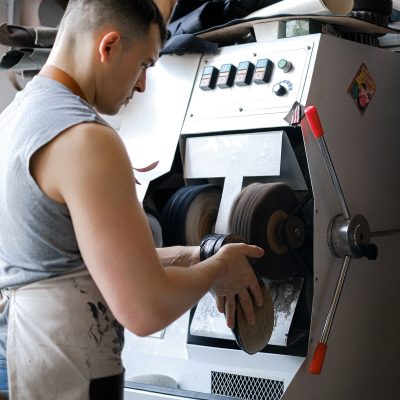
There is also a craft narrative worth preserving. The paper’s subtitle—”Valuing Craftsmanship in a Customer-Centric Era”—signals a key tension. Digital tooling could flatten making into pure automation. Instead, the authors frame personalization as a way to blend traditional craft with digital technology, putting the artisan’s judgment and the customer’s input into the same loop.
The strategic opening
For manufacturers, the opportunity is not merely to sell more shoes but to capture data and design authority. Brands that master personalization frameworks—technology stacks, fit algorithms, on-demand production—position themselves as indispensable partners rather than interchangeable suppliers. The paper promises to unpack those frameworks and the strategic openings they create.
The download is free, which matters: World Footwear is explicitly seeding the conversation rather than gating it. That suggests the organization expects personalization to be a defining theme of the next planning cycle, not a niche experiment.
The bottom line
Mass personalization is not a rebrand of old customization. It is a structural change in who designs the shoe and on what evidence. As digital tools make co-creation cheaper and more precise, the brands that treat customers as collaborators—not just buyers—will own the next decade of footwear relevance.
Source: World Footwear (worldfootwear.com), “Digital Personalization in Footwear: Valuing Craftsmanship in a Customer-Centric Era,” October 13, 2026.