 中文
China Buys $7.9 Billion of Leather Goods While Its Own Tanneries Stall
China’s leather books are telling two stories at once, and the louder one is about buying rather than making. New figures compiled from APLF data show the country imported $7.9 billion worth of leather, footwear, leather garments and bags in the first half of 2026 — a 4.9% year-on-year increase. That single number deserves more attention than it usually gets, because it lands alongside an export performance that went the other way: China’s leather industry exports fell 5.4% to $40.91 billion over the same six months.
Read those two lines together and a strategic shift becomes hard to miss. China is still the world’s factory floor for finished goods, but it is increasingly a customer for the raw material that feeds it, and a consumer market for the products it once only made.
Raw material in, intermediate goods out
The composition of imports is where the story sharpens. Raw hides and skins imports rose 2.9% in value to $600 million, with volumes up 7.0% to 749,000 tonnes. Meanwhile semi-finished leather imports dropped 14.8% to $400 million — volumes down 5.9% to 295,000 tonnes — and finished leather fell 5.0% to $270 million, with volumes down 2.2% to 18,000 tonnes.
That is not a rounding error. China is pulling in more hides at the top of the chain while importing measurably less leather at the intermediate and finished stages. In plain terms, the country’s own wet-blue and crust capability is being leaned on less, or its tanners are producing less that domestic factories want to buy. Either reading points to pressure inside China’s tanning tier — the segment most exposed to environmental compliance costs, effluent treatment capex and tightening local enforcement.
For tanners elsewhere in Asia, Latin America and Africa, this is the opening worth studying. Every tonne of semi-finished leather China stops importing is a tonne someone else can supply, provided they can meet chrome, thickness and traceability specifications consistently.
Footwear: fewer pairs, similar money
On finished footwear, the pattern is subtly different. Total footwear imports slipped 2.3% in value to $2.58 billion, but volumes collapsed 17.3% to 70 million pairs. Leather footwear specifically fell 2.0% to $1.10 billion against a 14.7% volume decline to 20 million pairs.
A 2% value decline against a 15-17% volume decline means one thing: average prices per pair climbed sharply. Chinese consumers and buyers are trading up, buying fewer but better or more expensive shoes. For European and Italian producers especially, that is a friendlier signal than the headline suggests — the premium end of the Chinese market is still absorbing imported leather footwear at rising unit values.
The consumer categories are where the growth lives
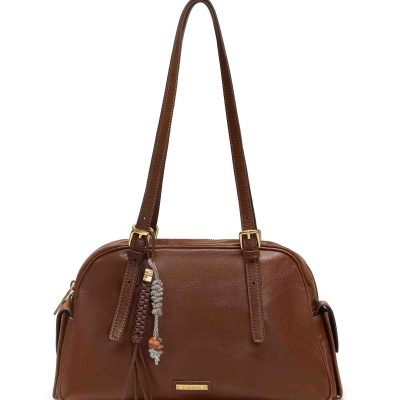
The genuinely fast-moving categories were not footwear or leather at all. Leather garment imports jumped 31.3% to $64.76 million, and travel goods and luggage grew 13.6% to $2.88 billion. Together they added roughly $400 million of import value — enough to more than offset the declines in leather and footwear.
This tells us where Chinese demand is reallocating: toward finished consumer goods with design content, brand value and gifting appeal. Bags and luggage have become the growth engine of China’s leather import basket. Anyone exporting to China should be asking whether their range still leads with shoes and hides, or whether the margin has moved to leather goods.
What it means for the trade
Three practical conclusions follow.
First, raw material suppliers hold the stronger hand right now. Rising hide volumes at rising value, with intermediate leather falling away, is the profile of a market where the upstream link is being paid and the middle is being squeezed. If you sell hides or wet-blue, China remains a durable outlet — but expect buyers to press hard on traceability and consistency as compliance pressure at home intensifies.
Second, the trade-up in footwear is real and measurable. A 14.7% drop in leather footwear volume against only 2% in value is not a market in retreat; it is a market repricing. Producers with genuine craft credentials and defensible price points have room.
Third, leather goods and luggage deserve a fresh look. A 13.6% rise to $2.88 billion makes travel goods China’s second-largest leather import line after footwear, and it is growing four times faster. Capacity in that segment — cutting, lining, hardware, finishing — is where the next round of sourcing contracts will be written.
The awkward truth for China’s own industry is that import growth of 4.9% alongside export decline of 5.4% describes a maturing manufacturing base. Being a $7.9 billion buyer is not weakness — but it does mean the country’s leverage in leather is shifting from production capacity to purchasing power, and the tanners who built their business on supplying Chinese factories need a new map.
Source: Leather News (leathernews.org), based on APLF data