 中文
中文The commissioning of a new factory is hardly a novelty. However, a remark made by Axel Dumas, the CEO of Hermes, at the ceremony is worth pondering by everyone.
A reporter asked him, “How will artificial intelligence change Hermès?”
He joked, “The advantage of Hermes is that we have almost missed all technological revolutions.”
This remark is a self-deprecating joke, but it’s also a bit of Versailles.
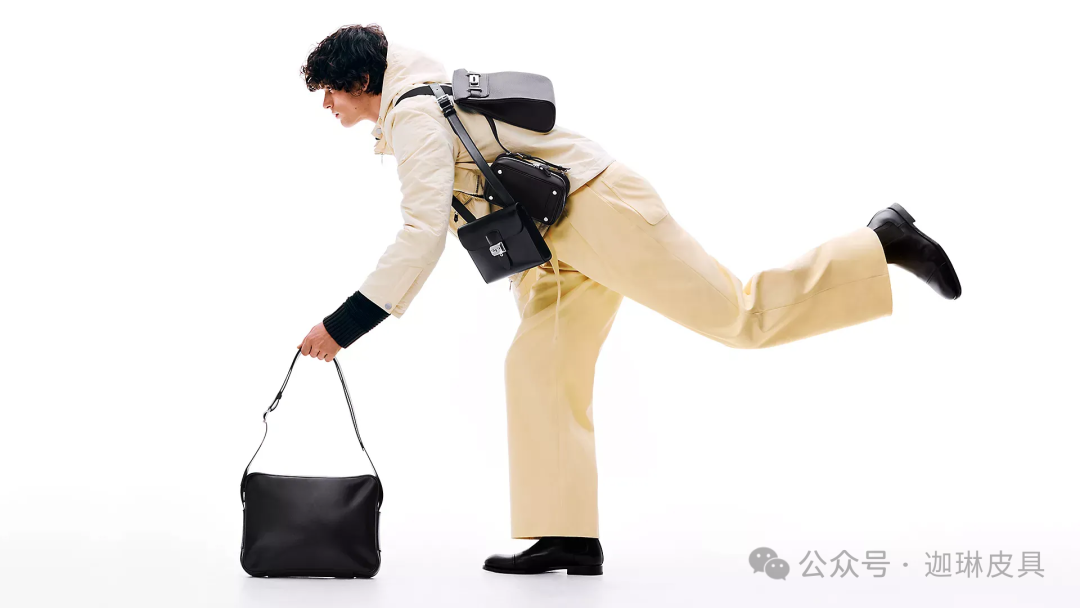
The Industrial Revolution, the Electrical Revolution, the Information Revolution, the Internet plus Revolution, the Artificial Intelligence Revolution… Every time, a group of old brands fall, and a group of new brands rise.
What about Hermes? It almost always “misses” the mark.
It’s not because it can’t keep up, but because it doesn’t want to keep up at all.
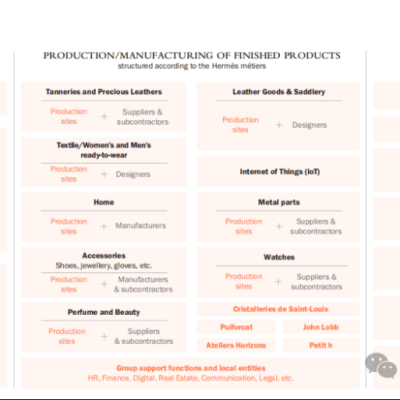
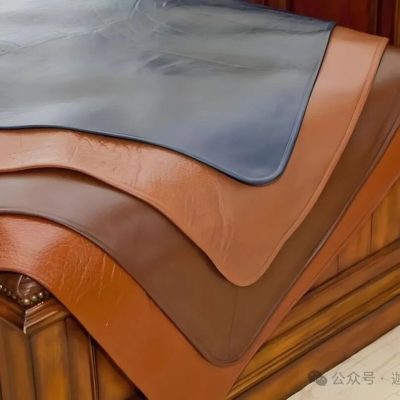
When others are replacing manual labor with machines, Hermès is sticking to handcrafting stitching. When others are using AI to design popular products, Hermès’ artisans still spend 18 months training and another 5 years to become independent bag makers.
A Kelly bag is crafted entirely by hand, from sewing to assembly, taking 15 to 20 hours.
A standard-sized Kelly 25 starts at 8,750 euros (approximately 70,000 yuan). You might not be able to get your hands on one yet.
The logic of Hermès is simple: technology can be replicated, but craftsmanship cannot. Machines can speed up, but time cannot.
Many people fail to understand why Hermès chooses to miss out on technological revolutions and instead becomes a “moat”: why doesn’t it expand production? Why doesn’t it use machines to make bags? Why does it insist on preserving French craftsmanship?
Because what Hermes sells is never just “bags”, but scarcity.
If Hermes were like mass consumer goods, ubiquitous, readily available, and affordable, it would no longer be Hermes.
Its value precisely stems from those “anti-commercial” practices: not pursuing speed; it takes 15-20 hours to make a single bag, and rushing is futile.
No pursuit of output: Each factory has only 260 craftsmen, not a single one more.
No pursuit of scale: By 2030, there will only be 28 workshops across France.
This kind of “slowness” is fatal in the business world. However, in the luxury goods industry, slowness means scarcity, scarcity means high price, and high price means a competitive advantage.
So Axel Dumas dares to say, “We have almost missed all technological revolutions.” The subtext is: You go after yours, I don’t care. Because what I have in my hands, machines can’t produce.
What does the new workshop look like? The Lupu workshop, which is equipped with natural light, forest scenery, and 260 craftsmen, is also interestingly designed.
It is not a cold, industrial factory building. The architectural firm deliberately arranged the layout along the north-south axis to ensure that natural light can shine into the core production area.
With a double-curved roof and transparent facade, craftsmen work inside while being able to see the forest outside at a glance.
Inside the workshop, there are dining areas and a reception area, with a winding internal passage leading to eight production workshops.
The message Hermès wants to convey is clear: craftsmen are not just cogs in an assembly line; they are engaged in a beautiful craft in a beautiful environment.
This respect for “people” is also one of the reasons why Hermès can retain top craftsmen.
According to Hermes’ plan, France will open three more leather workshops by 2030, located in Charleville-Mezieres, Colombey-Les-Deux-Eaux and Les Andes.
Note that the decisions for these factories were made approximately four years ago.
It doesn’t make decisions based on short-term market trends, but only focuses on the long term.
Such perseverance is rarely seen in the luxury industry nowadays.
The story of Hermès sounds like the triumph of an “old stick-in-the-mud”.
But upon careful consideration, its logic is actually quite clear: when everyone is chasing “change”, “unchanging” itself becomes the greatest distinction.
Technological revolutions may come and go, but the human pursuit of “beauty”, “scarcity”, and “handcraftsmanship” remains unchanged.
Hermes “missed out” on all technological revolutions, but it has captured human nature.
This is its real advantage.