 中文
中文The enabling act for the EU Deforestation Regulation (EUDR) is about to be released, and whether leather will be included in the scope of regulation will be finally determined at this moment.
Representatives from the global leather industry chain have gathered and issued a final urgent call: Please remove leather from Annex I of the regulation based on scientific evidence.
This is not an ordinary industry lobbying, but a “decisive battle” concerning the survival of the European leather industry, the global leather trade pattern, and the fate of millions of tons of waste.
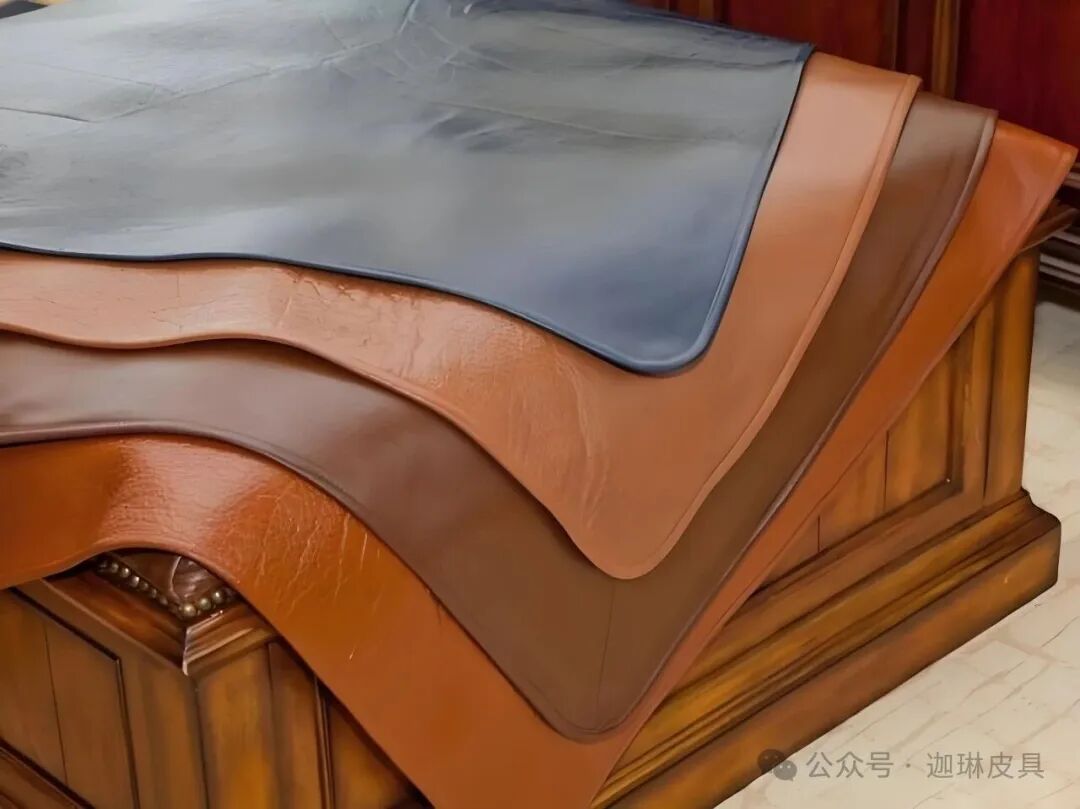
The intention behind EUDR is good: to prevent the consumption of products in the EU that are linked to global deforestation. Soybeans, palm oil, beef, cocoa, coffee, rubber, and timber — these are indeed the primary drivers of deforestation.
However, leather was inadvertently affected.
At the meeting in Brussels, the industry side presented hardcore data: a piece of raw hide only accounts for about 1.4% of the economic value of a cow. The remaining 98.6% consists of beef, milk, internal organs, bones… Farmers raise cows to sell meat and milk. Leather is just a by-product, or even a “waste product”. Have you ever seen someone cut down an entire forest just to sell that 1.4% of by-products?
The president of the Italian Tannery Association stated firmly: “Existing scientific evidence has clearly shown that leather has nothing to do with deforestation. Implementing the current plan will not only fail to curb deforestation, but will also lead to the collapse of small and medium-sized tanning enterprises in Europe, an abnormal increase in industry concentration, and the transfer of environmental impacts to other regions.”
You want to protect the forest, but in the end, you have killed the factories in Europe and transferred the pollution to countries with lower environmental standards. This is completely contrary to the original intention of the regulations.
02 How serious will the consequences be if it is forcibly included?
The European leather industry is experiencing “blood loss” and relocating outwards. To avoid high compliance costs, European tanneries may be forced to move out of the European Union. Tuscany in Italy, France, Spain… These leather industry clusters with hundreds of years of history are at risk of disintegration. About 1,500 enterprises and 30,000 direct jobs are hanging in the balance.
Millions of tons of hides and skins have become waste. With European tanneries not buying them, where will these raw hides go? Most likely, they will be thrown away, landfilled, or incinerated. A cow is only used for its meat and milk, yet its skin becomes waste. This is completely contrary to the “circular economy” that the European Union constantly advocates.
Environmental impacts are “transferred” rather than “disappeared”. The leather processing links have shifted from Europe, where environmental standards are strict, to regions with weak supervision. Pollution still exists, only it has moved to another place. This is called “pollution transfer”, not environmental protection.
“Assist” alternative materials. The strict restrictions imposed by EUDR on leather have, ironically, created market space for leather substitutes such as mycelium and plant-based products. This poses a threat to the traditional leather industry, but it may also be a signal forcing it to undergo transformation.
China cannot escape either: the “spillover effect” of EUDR. China is one of the world’s largest leather processing and export hubs. Although EUDR is an EU regulation, its impact has already extended beyond the Eurasian continent.
For Chinese leather export enterprises, the greatest challenge lies in supply chain traceability. They procure raw hides from Southeast Asia, Africa, and Latin America, process them, and then export them to the European Union. The multi-tiered procurement structure makes it extremely difficult to collect geolocation data at the plot level.
Although China is listed as a “low-risk” country eligible for simplified procedures, no compliance action can be omitted. Certification fees range from tens of thousands to hundreds of thousands of RMB, posing a significant burden on small and medium-sized export enterprises.
If leather is removed from the EUDR annex, China’s exports to Europe will be spared from the heavy burden of traceability. If it remains, companies will have to invest a significant amount of money to establish a full-chain traceability system.
At the end of April, waiting for an answer. The President of the European Commission, von der Leyen, had previously made it clear that she “does not support reopening the EUDR legislation again”, but promised to “ensure the success of the review of the provisions in April 2026”. The enabling legislation at the end of April is a direct result of the review of the provisions.
This means that the end of April is likely to be the last window for the leather industry to seek an exemption at the legislative level.
The global leather industry chain has done everything it can: held meetings, lobbied, presented data, and reasoned. Now, it’s up to Brussels to make a decision.
Nadella, a member of the European Parliament, made a weighty statement at the meeting: “Good laws should precisely target those who are truly responsible for deforestation.”
Aiming the gun at the by-product of “1.4%” while ignoring the main force of “98.6%” is not good law.
I hope the decision made at the end of April is based on scientific evidence, rather than assumptions.
Leather is not the culprit behind deforestation; it is a top performer in the circular economy. This truth should not be understood only by those in the industry.