 中文
中文title: “FAIST Voices: How AMF Safety Shoes Automated Technical Footwear Production” seo_description: “Portuguese safety footwear maker AMF Safety Shoes has developed automation-focused solutions under the FAIST project, combining injection moulding and intelligent logistics to cut manual steps.” seo_tags: [“AMF Safety Shoes”, “FAIST”, “Portugal”, “safety footwear”, “footwear automation”, “Toworkfor”] seo_slug: “faist-voices-amf-safety-shoes-automation” source_url: “https://www.worldfootwear.com/news/faist-voices-meet-amf-safety-shoes/11767.html”
FAIST Voices: How AMF Safety Shoes Automated Technical Footwear Production
As part of the FAIST project, Portuguese technical and safety footwear manufacturer AMF Safety Shoes has committed to automation-focused solutions that prioritise both efficiency and sustainability — a bet that reflects a wider push across Portugal’s footwear and leather goods sector to modernise and sharpen its international competitiveness.
The FAIST (Agile, Intelligent, Sustainable and Technological Factory) consortium brought together more than 40 Portuguese partners across footwear and leather goods, technology providers and research centres. From June 2022 to June 2026, the programme channelled about 50 million euros of investment into projects designed to upgrade the industry’s capabilities.
AMF’s story begins in 1999, when Albano Fernandes founded the company as an assembler of footwear components for other brands. The turning point came in 2005, when the business decided to specialise in technical and safety footwear, launching the Toworkfor brand. “There were hundreds of fashion footwear companies. There were only two safety footwear companies,” Fernandes recalls. “In my mind, it made more sense because there would be fewer competitors and less competition.”
Today the company is known for combining design, comfort, safety and technology in the mid-to-high end of the market, differentiating through patents, exclusive materials, and partnerships with universities and technology centres.
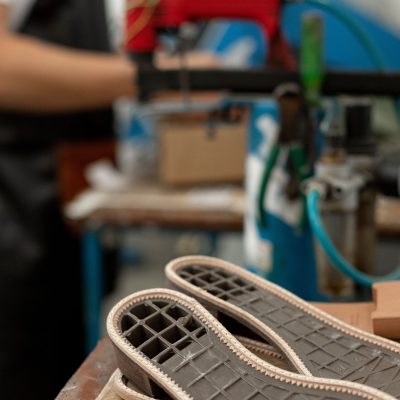
Within the FAIST framework, AMF worked with DCSI to develop automation-focused solutions for technical footwear production. These include a technologically advanced line that combines multiple manufacturing steps into a single injection-based cell, reducing the need for manual operations such as gluing or trimming the sole after injection. The aim is consistent, high-quality assembly with less dependence on manual labour.
Work also advanced on the industrial-scale production of layered footwear using a patented process intended to make it economically viable. “From an industrial perspective, their process is not very profitable,” the CEO acknowledged. “However, with the support of various entities and Portuguese technology, we will create a process that is profitable and eliminates most of the sewing operations. It’s almost as if we put the ingredients in and the finished shoe comes out.”
Alongside the new equipment, AMF reorganised its shop floor and management processes to absorb the developments — a reminder that automation succeeds only when the surrounding operations are rebuilt around it. The new line significantly increased daily capacity for direct-injection outsoles and reduced several manual operations, improving quality and cutting variation, with fewer rework and repair interventions.
The early assessment points to meaningful gains, and AMF’s experience illustrates the broader FAIST thesis: that Portuguese footwear can defend its position not by competing on cost but by competing on technology, sustainability and the ability to deliver consistent, high-spec product at scale.
Source: World Footwear (worldfootwear.com).