Hermès opens a new factory, and all the leather craftsmen in France are flocking there? It takes 20 hours to make a Kelly bag
wasionViews(49)
Recently, the global luxury market has been in a gloomy state, with conflicts in the Middle East suppressing consumer sentiment and the share prices of major brands plummeting.
However, there is one “bizarre” company that remains completely unaffected – Hermès.
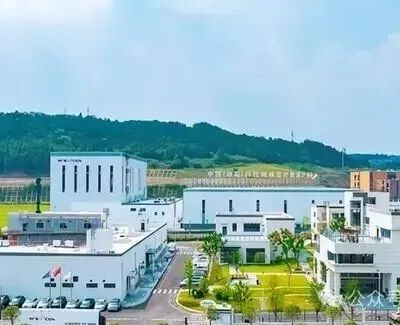
Just a few days ago, Hermès opened its 25th leather goods factory in the city of Lupé near Bordeaux, France.
The new factory is currently only engaged in one thing: manufacturing Kelly bags. Production of Constance and Bride de Jour will gradually expand thereafter.
You might be thinking: it’s just opening a factory, what’s the big fuss?
Don’t be hasty. Behind this factory lies the “off-the-wall” secret of Hermès.
.
Sticking to France, only 260 ‘artisans’ in one factory
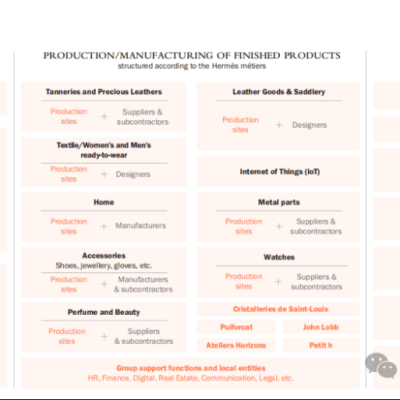
All of Hermes’ leather workshops are located in France. One family, not too many, not too few.
Each factory is equipped with only about 260 craftsmen.
Why not 2600? Because Hermès seeks not “production volume” but “craftsmanship”.
A new employee must undergo 18 months of systematic training before becoming a regular worker. After becoming a regular worker, they must further accumulate experience for another 5 years before being able to independently craft a bag.
That is to say, it takes at least six and a half years for a Hermès craftsman to progress from the beginning to “graduation”.
In six and a half years, other companies may have changed their production lines three times. At Hermès, a craftsman is only just qualified to independently craft a bag.
.
A Kelly bag, crafted by hand, takes 15 to 20 hours
You may only spend a few seconds carrying a Kelly bag out of the door.
But for these few seconds, a craftsman has to spend 15 to 20 hours.
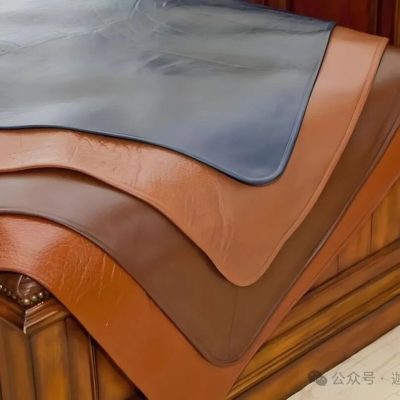
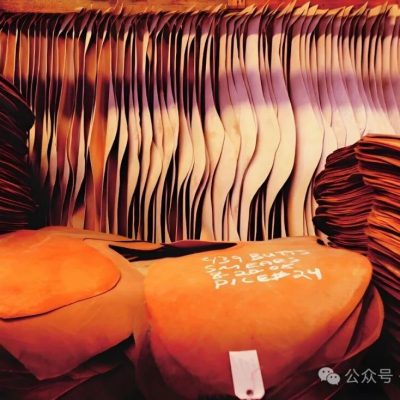
From leather selection, cutting, stitching, polishing, to assembly… every step is done by hand. There is no assembly line, no machine to do the work.
After a bag is finished, the craftsman will leave his/her signature inside. This means: he/she is responsible for any issues with the bag.
This kind of “dedicated” extreme craftsmanship has become the core barrier for Hermès to resist market fluctuations.
When the economy is good, everyone buys Hermès. When the economy is bad and people are anxious, everyone finds that Hermès is the most stable.
Because its value does not depend on the market, but on every stitch and thread.
.
Others are contracting, while it is expanding; others are focusing on quarterly reports, while it is looking ahead ten years
The “calmness” of Hermes is particularly evident in this new factory opening.
Global luxury stock prices have generally fallen, and everyone is contracting, laying off employees, and cutting budgets. What about Hermès? It is expanding at a predetermined pace.
Moreover, the planning for this new factory was advanced by four years.
That is to say, as early as four years ago, Hermès decided to open this factory in 2026. Regardless of how the market changes or the economy fluctuates during these four years, it will still proceed as planned.
Even more “scary” is that Hermès plans to add three more leather goods factories in France by 2030.
While other brands look at quarterly financial reports and stock price fluctuations, Hermès looks ahead to ten years from now.
The story of Hermes sounds like the victory of a “slow company”.
But the deeper truth is: when everyone pursues “fast”, “slow” becomes the scarcest thing.
When others replace manual labor with machines, handcraft with assembly lines, and quality with marketing, Hermès chose a harder path – dedicating itself to craftsmanship, French origin, and long-termism.
This path may be slow, but it is steady. So steady that no market turbulence can overturn it.
Next time you see a Kelly bag, don’t just look at its price. Think about the 15 to 20 hours of painstaking effort that a craftsman put into sewing it, stitch by stitch.
That’s not a bag, that’s the shape of time.
 中文
中文