 中文
中文But you may not know that the leather industry has also begun to “outsource production”.
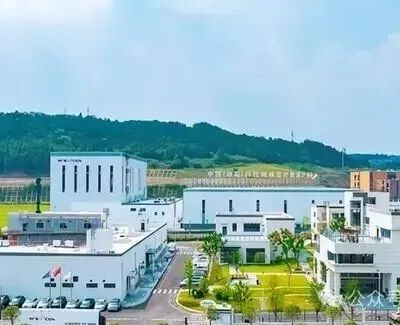
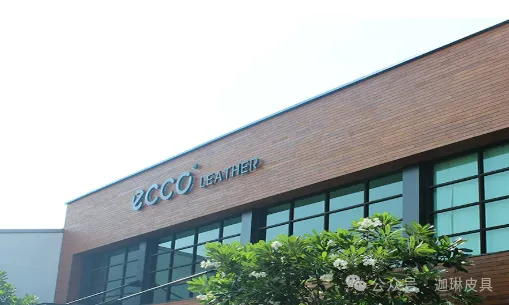
Recently, Primeasia, a renowned leather manufacturer, announced that it has reached a production cooperation agreement with Ecco Indonesia. Primeasia will directly produce its own leather at Ecco’s factory located in Surabaya, Indonesia.
The two companies are not engaging in acquisition or merger, but rather in “shared factory” cooperation.
What is the intention behind this move?
Without building a new factory, Primeasia is not a small company that directly “borrows a nest to lay eggs”. It already has multiple production bases around the world, and this expansion in Indonesia is its third.
However, instead of buying land, building a factory, and recruiting employees, it chose to directly rent an existing factory from Ecco.
Why?
Because time waits for no one.
It takes at least one to two years to build a leather factory from land acquisition to production. However, by renting a mature factory from others, with equipment, workers, and environmental protection facilities all ready, the factory can start production within a few months.
For manufacturers delivering products to customers, time is competitiveness.
What is the point of producing in Indonesia?
Indonesia is one of the largest economies in Southeast Asia and a significant producer in the leather industry.
Primeasia chose to locate its factory in Indonesia for three reasons: proximity to customers. Indonesia has numerous shoe, bag, and furniture factories, all of which are major leather customers. Previously, importing leather from other countries required waiting for shipping schedules and customs clearance, often taking one to two months. Now that it is produced locally, it can be delivered within a few days. The delivery cycle has been significantly shortened.
Reduce costs. The labor and energy costs in Indonesia are lower than those in some mature production areas in China and Vietnam. In the long run, a significant amount can be saved on the cost per square foot of leather.
Avoid trade risks. In recent years, global trade frictions have been ongoing, and tariffs can increase at any time. Producing and selling locally in Indonesia can bypass many import and export troubles.
PART 03
Why choose Ecco? Many people know Ecco not just for “renting factory buildings”, but also because of its shoes. However, Ecco is also a “big name” in the leather industry – it boasts one of the few vertically integrated tanneries in the world, controlling everything from raw hides to finished leather products.
What Primeasia values is not just Ecco’s factory buildings and equipment, but also its management system, environmental standards, and skilled workers.
The CEO of Primeasia put it quite straightforwardly: Ecco is a partner who shares our values and aligns closely with us in terms of quality, integrity, and value.
Ecco’s factory has a solid foundation, so it can be utilized without major modifications, and the quality of the leather produced is guaranteed.
PART 04
Will this “shared factory” model become popular?
The collaboration between Primeasia and Ecco provides a new perspective for the leather industry: in an era of overcapacity, it is not necessary to build one’s own factory.
Ecco’s factory may have idle capacity, and leasing it to Primeasia can revitalize assets and share costs. Primeasia can quickly obtain production capacity in Indonesia without heavy asset investment. Both parties can get what they need, achieving a win-win situation.
This model has already been matured in the electronics and apparel industries. The leather industry, being relatively traditional, heavy-asset, and long-cycle, is accustomed to the practice of “building one’s own factory”.
But this collaboration may serve as a signal: in the future, there will be more and more “asset-light operations” in the leather industry.
Primeasia’s use of Ecco’s factory for leather production may sound like “small news,” but it masks a major industry trend: competition is intensifying, and speed is becoming increasingly crucial. Whoever can respond to customers faster and deliver at lower costs will emerge victorious.
Building one’s own factory is the old path of “heavy assets”, while renting a factory for production is the new approach of “light assets”.
Whether this path can be paved successfully depends on the follow-up actions. But at least, Primeasia has taken the first step.