 中文
中文Mozambique’s Maputo National Park Backs Locally Made Leather Boots for Rangers
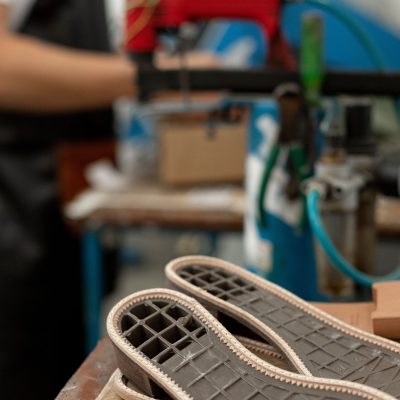
In a convergence of conservation, community development, and leather value chain building, Mozambique’s Maputo National Park has begun field-testing the first 10 pairs of leather boots produced by a local artisan association. The boots, made from cattle leather sourced and processed within Mozambique, are being issued to forest and wildlife rangers as part of a trial that will assess their durability and performance in both terrestrial and marine operations.
The initiative is more than a procurement experiment. It is a deliberate effort to create a local leather goods value chain that can generate income for rural communities while supplying conservation teams with purpose-built footwear. The boots were produced under the Herding for Health Programme, an initiative supported by Maputo National Park in partnership with Conservation International and the Peace Parks Foundation, which co-manages the conservation area near Mozambique’s capital.
Miguel Gonçalves, administrator of Maputo National Park, explained that the programme is designed to promote sustainable grazing practices while encouraging communities to develop economic initiatives based on local resources—including the processing of cattle hides into footwear and other leather goods. For pastoralist communities that have traditionally sold raw hides at low margins or simply discarded them, the ability to transform that raw material into a finished product creates a fundamentally different economic equation.
The trial phase is deliberately rigorous. Rangers operate in demanding conditions that test footwear to its limits: rough terrain, high temperatures, prolonged exposure to water (both fresh and salt), and the abrasive effects of vegetation and sand. If the locally made boots perform well, the implications extend far beyond a single park’s procurement. A proven, locally produced leather boot could become a standard-issue item across multiple conservation areas in Mozambique and potentially further afield.
Maputo National Park is no ordinary conservation area. Part of the Lubombo Transfrontier Conservation Area, which connects protected regions across Mozambique, South Africa, and Eswatini, the park offers both safari and marine tourism experiences. Since rehabilitation work began in 2006, the park has successfully reintroduced 14 species and now supports approximately 32,000 animals. In July 2025, UNESCO added the park to its World Heritage List, citing its terrestrial, coastal, and marine ecosystems and noting that the park is home to nearly 5,000 species.
That UNESCO designation adds another layer of significance to the boot initiative. World Heritage status brings visibility, tourism, and expectations around community benefit. A leather goods value chain that channels economic returns to local communities aligns with the UNESCO framework’s emphasis on conservation-linked livelihoods.
The broader context for this initiative is the untapped potential of African leather industries. Across the continent, cattle populations are substantial, but the majority of hides are either exported raw or simply left to rot. Building domestic leather processing capacity—even at a small scale, as in the Maputo National Park trial—represents a step toward capturing more value within African economies.
The 10 pairs of boots currently in testing are a starting point. If the trial demonstrates that locally made leather boots can meet the performance requirements of rangers, the programme could scale to supply other institutions, communities, and regions across Mozambique. For the cattle farmers and tanners involved, it would represent a transition from subsistence activity to a viable commercial enterprise.
That transition is precisely what the Herding for Health Programme is designed to enable. By connecting grazing management, hide quality, tanning, and finished goods production into a single coherent value chain, the programme offers a template that other conservation areas—in Mozambique and beyond—could adapt.
For now, the focus is on the 10 pairs of boots and the rangers who will put them through their paces. If they hold up, a small artisan association in Mozambique may have helped launch something considerably larger than a pair of shoes.
Source: Leather News – Mozambique’s Maputo National Park Tests Locally Made Leather Boots for Rangers