 中文
中文title: “Stella International Grows H1 Revenue and Commissions Three New Factories” seo_description: “Stella International reported 1.5% H1 revenue growth to $786.7 million and will ramp up three new factories in Indonesia, Bangladesh and Vietnam by late 2026.” seo_tags: [“Stella International”, “footwear manufacturing”, “Indonesia”, “Bangladesh”, “Vietnam”, “capacity expansion”] seo_slug: “stella-international-h1-2026” source_url: “https://leathernews.org/stella-international-reports-1-5-revenue-growth-to-786-7-million-in-h1-2026-and-commissions-3-new-factories/”
Stella International Grows H1 Revenue and Commissions Three New Factories
Stella International, one of the world’s largest athletic and lifestyle footwear manufacturers, has posted first-half revenue growth and, more tellingly, confirmed a multi-country factory expansion that signals confidence in long-term demand despite a cloudy macro backdrop.
For the first six months of 2026, Stella reported consolidated revenue of US$786.7 million, up 1.5% from US$775.0 million a year earlier. In the second quarter, ended 30 June, revenue rose 1.2% to US$449.3 million from US$444.0 million. The growth was modest but positive — a small victory in a year when several peers reported declines.
The footwear manufacturing business, Stella’s core, reached US$439.2 million in Q2, up 1.4% from US$433.0 million, and US$766.6 million for the half, up 1.7%. Shipment volumes were essentially flat: 15.6 million pairs in Q2 (versus 15.4 million) and 27.5 million pairs for the half (unchanged). The average selling price held at US$28.2 per pair in Q2, and rose 1.8% to US$27.9 per pair for the half — a reflection of a richer product mix in the Sports segment and higher raw-material costs.
That pricing stability, rather than volume, is what carried the top line. In a demand-soft environment, holding ASP while shipments stay flat is a sign of pricing power — and Stella credited a higher-ASP mix within its Sports segment and pass-through of raw-material costs.
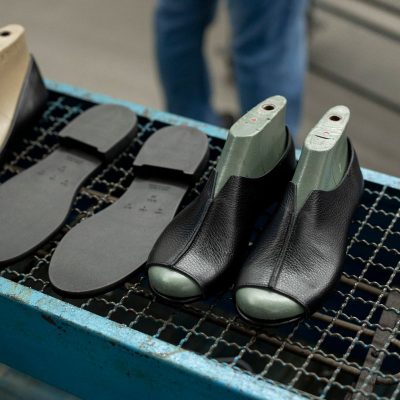
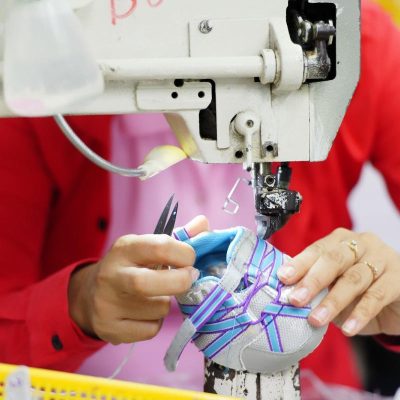
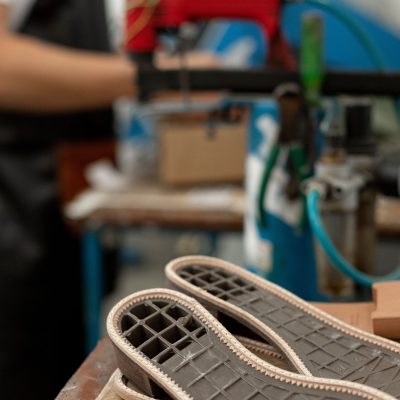
The bigger story is capacity. Stella is pressing ahead with its Three-Year Plan for 2026–2028, and will commission and ramp up three new factories in Indonesia, Bangladesh and Vietnam during 2026, with operations expected to begin in the second half of the year. Together with its existing Indonesian plant, the new facilities are projected to add around 20 million pairs of annual production capacity over the coming years.
That is a bold bet. Adding 20 million pairs of capacity when global footwear demand is, by several measures, softening takes conviction — and capital. It also reveals where Stella believes the structural growth still sits: Southeast and South Asia, where labour, logistics and trade-access advantages continue to pull manufacturing investment. The three-country spread also hedges against any single market’s wage inflation, tariff exposure or political risk.
Stella framed the first-half performance as “within expectations despite geopolitical and economic uncertainties,” and said forward order visibility remains solid. For a contract manufacturer, order visibility is the single most important forward indicator, and “solid” is about as reassuring a word as the company can offer in the current climate.
The contrast with rivals is instructive. Yue Yuen, the other footwear-manufacturing giant, saw its first-half manufacturing margin compress by more than three points as shipments fell. Stella, by holding price and mix, grew ever so slightly instead. Different portfolios, different brand mixes, and different cost positions produce different outcomes — but Stella’s ability to expand while a peer retrenches suggests its customer and product mix is currently more defensive.
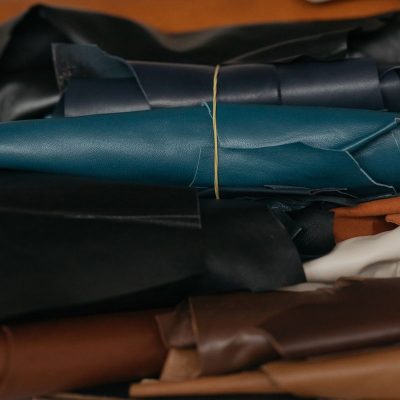
For the leather and footwear supply chain, Stella’s expansion is a vote of confidence in Asian manufacturing’s durability. Even as Western consumers turn cautious and some brands reshore or diversify, the largest contract manufacturers are doubling down on the region. The 20 million pairs of new capacity will need hides, leather, components and chemicals — a demand signal for the upstream industry at a moment when many are bracing for the opposite.
Stella’s half-year is, in short, a study in steady-handed optimism: modest growth today, a meaningful capacity bet for tomorrow, and an order book that still looks dependable. In 2026, that counts as a strong position.
Source: Leather News (leathernews.org), reporting on Stella International Holdings’ H1 2026 results, August 2026.