 中文
中文title: “Bangladesh Proposes New Minimum Wage for Leather and Footwear Workers” seo_description: “Bangladesh’s Minimum Wage Board proposed a Tk 11,900 monthly minimum for entry-level leather and footwear workers, up from Tk 7,100 set in 2020.” seo_tags: [“Bangladesh”, “minimum wage”, “leather goods”, “footwear”, “Minimum Wage Board”, “labour reform”] seo_slug: “bangladesh-leather-minimum-wage-2026” source_url: “https://leathernews.org/bangladesh-proposes-new-minimum-wage-structure-for-leather-and-footwear-workers/”
Bangladesh Proposes New Minimum Wage for Leather and Footwear Workers
Bangladesh has taken a long-overdue step toward updating pay for its leather goods and footwear workforce. On 14 August 2026, the Ministry of Labour and Employment issued a gazette notification inviting public and industry feedback within 14 days on a proposed minimum wage structure — the first comprehensive review since 2020.
The proposal sets a minimum monthly wage of Tk 11,900 (about US$96.9) for entry-level workers at Grade 6 in leather goods and footwear factories. That base comprises Tk 6,000 (US$48.8) in basic pay, house rent equal to 50% of basic, a Tk 1,000 (US$8.14) medical allowance, Tk 600 (US$4.89) transport allowance and Tk 1,300 (US$10.5) food allowance.
The structure scales upward by grade. Grade 5 workers would receive Tk 13,085 (US$106.5), Grade 4 Tk 14,405 (US$117.3), Grade 3 Tk 15,875 (US$129.28), Grade 2 Tk 17,945 (US$146.15) and Grade 1 Tk 23,255 (US$189.39). For employees — a distinct category from workers — the proposed minimum starts at Tk 14,405 (US$117.32) for Grade 4, with a basic of Tk 7,670 (US$62.46), rising through Grade 3 (Tk 16,235 / US$132.23), Grade 2 (Tk 18,815 / US$153.23) and Grade 1 (Tk 20,600 / US$167.77). Apprentice workers and employees would receive Tk 10,000 (US$81.4) per month.
The comparison with the last review is striking. In 2020, the minimum was set at Tk 7,100 for workers and Tk 8,525 for employees. The new proposal lifts the entry-level worker floor by roughly 68% in taka terms — a meaningful catch-up after six years of inflation eroding real wages.
The mechanism behind the move matters. The government formed the Minimum Wage Board on 2 February with representatives of both workers and employers, tasked with reviewing wages in Bangladesh’s leather goods and footwear sector. The board’s proposal is now open for recommendations and objections from the public and industry stakeholders during the 14-day window — a consultative step that, if honoured in practice, should blunt the kind of acrimony that wage revisions often provoke in the garment and leather sectors.
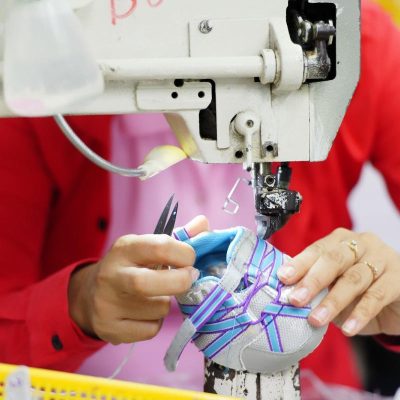
For Bangladesh’s leather industry, the timing is sensitive. The sector is a priority export earner and a centrepiece of the country’s push to diversify beyond ready-made garments. Higher wages cut both ways: they improve the lives of hundreds of thousands of workers and strengthen Bangladesh’s case against the “race to the bottom” critics who question low-cost manufacturing, but they also raise costs for factories already navigating global demand softness and competition from Vietnam, India and China.
The wage board’s structure — separating workers from employees, and grading both — is a pragmatic recognition that a tannery or shoe factory contains many roles, from line operators to supervisors. A single flat rate would have been simpler but less fair; the graded approach lets productivity and responsibility be reflected in pay.
The open question is implementation. Bangladesh has a mixed record on translating wage-board proposals into enforceable, uniformly applied reality across thousands of small and medium enterprises. The 14-day comment period will reveal how forcefully employers push back, and whether the final figure lands close to the proposal or is diluted.
What is clear is that a 68% proposed increase signals the state’s intent to keep pace with living costs and to professionalise a strategic industry. For the leather and footwear supply chain — buyers, brands and investors watching Bangladesh — the message is that the country’s cost advantage will gradually narrow, even as its workforce becomes more stable and its social-compliance profile improves.
If the proposal survives the consultation intact, Bangladesh’s leather workers will enter 2027 with their first meaningful raise in six years. For an industry built on both craft and competitiveness, that is a step worth watching.
Source: Leather News (leathernews.org), reporting on the Bangladesh Minimum Wage Board proposal, August 2026.