 中文
中文title: “TFL Bets on 70% Biobased Tanning with VEGTAN Launch at ACLE Shanghai” source: https://internationalleathermaker.com/tfl-to-showcase-vegtan-at-acle-2026/ date: 2026-08-05
TFL Bets on 70% Biobased Tanning with VEGTAN Launch at ACLE Shanghai
The leather chemicals business has produced a lot of sustainability branding over the past decade and comparatively few processes that tanners actually switched to. So when a company with twenty years of continuous presence at the All China Leather Exhibition launches a new tanning brand there, it is worth checking whether there is chemistry behind the logo.
TFL will return to ACLE 2026 — running 1–3 September at the Shanghai New International Expo Centre — with a stand at Hall E2, Booth E03, under the theme “Be Prepared to Experience the Future.” The centrepiece is VEGTAN, the company’s new brand for responsible tanning.
What VEGTAN Actually Is
The headline claim is specific enough to be testable: VEGTAN is based on a process with more than 70% biobased content, and it upcycles byproducts from other industries without competing with the human food chain.
That second clause deserves attention, because it is where most biobased tanning claims get uncomfortable. Plenty of “renewable” tanning agents are derived from crops that could be eaten, or from land that could grow food. The moment a tanning process scales, that competition becomes a real sustainability liability rather than a theoretical one — and brand compliance teams have started asking about it.
By sourcing from industrial byproducts instead, TFL sidesteps the food-versus-material argument entirely. It also aligns the process with the leather industry’s own strongest argument for its existence: leather itself is an upcycled byproduct. A tanning system built on the same principle is philosophically consistent in a way that most alternatives are not.
Whether 70% biobased translates into comparable fastness, hydrothermal stability and finish performance is the question every technical manager will ask at the booth. TFL has not published comparative data in its announcement, and until it does, the claim remains a strong starting position rather than a proven substitution.
The Bisphenol Problem Nobody Wants to Talk About
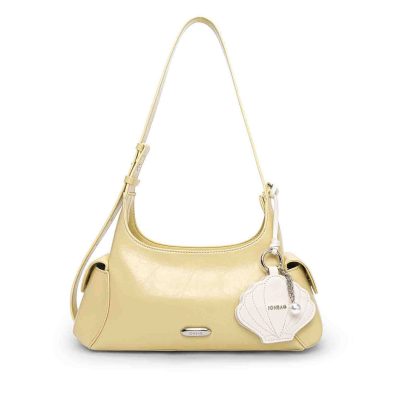
Alongside VEGTAN, TFL will present leather accessories produced with ultra-low bisphenol content — a quieter announcement that may matter more commercially in the short term.
Bisphenol compounds have become one of the leather supply chain’s most awkward regulatory exposures. Restricted substance lists from major brands have tightened repeatedly, European regulation continues to move, and detection thresholds keep dropping. A tannery can do everything right on chrome management and water treatment and still fail an audit on a syntan residue it did not know it had.
Offering a low-bisphenol route that maintains “leather quality and performance” is therefore not a green marketing play. It is risk removal. For suppliers to automotive and luxury brands — the two most audit-heavy segments in the industry — that is a purchasing argument that survives contact with the procurement department.
Why Shanghai, and Why Now
TFL’s choice of ACLE for the launch is not incidental. Visitors will also be able to view leather articles featuring the forecasted Autumn/Winter 2027–28 colour trends, positioning the stand as both a chemistry showcase and a design resource.
Samer Al Jabi, Interim CEO & CCO of TFL Group, framed the strategic logic directly: “ACLE is a cornerstone event for the global leather industry and an important opportunity to connect with customers, exchange ideas, and showcase innovation. Given the strategic importance of China and the Asia-Pacific region for TFL, we are particularly proud of our strong local presence, combining manufacturing excellence, technical expertise, and close customer support to help our partners succeed. With VEGTAN, our latest generation of sustainable leather solutions, we are demonstrating how innovation can help create a more responsible and future-ready leather industry.”
The subtext is worth reading. Launching a sustainability-led tanning brand in Shanghai rather than Milan or Bologna is a statement about where the volume is and where the compliance pressure is heading. Chinese and Southeast Asian tanneries supplying European and American brands are increasingly subject to the same restricted substance lists and carbon disclosure requirements as their Italian counterparts, but with less established access to the chemistry that satisfies them. A supplier with local manufacturing and technical support in the region is selling capability, not just product.
The Test Comes After the Show
Trade fair launches are easy. Conversion is hard. The leather chemicals sector is littered with sustainable tanning systems that generated excellent booth traffic and then failed to displace incumbent processes because the retanning behaved differently, the shade matching drifted, or the price premium never came down.
VEGTAN’s advantage is that it enters a market where the regulatory floor is rising fast enough to make switching costs look reasonable. The EU’s chemical framework tightens. Brand-level restricted substance lists tighten faster. Tanners who wait for perfect economics may find the decision made for them by a customer audit.
For tanners planning ACLE, the practical move is straightforward: bring your actual article specifications to Booth E03, not general questions. Ask for hydrothermal stability data, ask what the retanning window looks like, and ask what the biobased content does to lead times. A 70% biobased process that works on your articles is worth a great deal. One that works only on TFL’s demonstration pieces is worth a coffee and a handshake.
Source: International Leather Maker