 中文
中文title: “A 144-Year-Old Paris Monogram House Just Changed Hands in Court” source: https://leathernews.org/groupe-lecuyer-acquires-historic-french-leather-goods-brand-moreau-paris/ date: 2026-08-05
A 144-Year-Old Paris Monogram House Just Changed Hands in Court
There are only a handful of historic Parisian monogram houses. Louis Vuitton. Goyard. Moynat. And Moreau Paris — founded in 1882, the least famous of the group and, until last week, the most precarious.
Moreau now has a new owner. French luxury group Groupe Lecuyer has acquired the brand through its holding company Cardinal Invest, following approval from the Paris Commercial Court. The deal closes a court-supervised international sale process launched in June, after Moreau’s French holding company entered judicial restructuring.
It is a small transaction by luxury standards. It is also one of the more revealing ones of the year, because of what it says about who is buying distressed heritage right now — and why.
The Long Detour Through Tokyo
Moreau’s recent history reads like a case study in what happens when a great name outlives its infrastructure.
The house was founded in 1882, in the same Parisian wave that produced its now-far-larger neighbours. It faded, then was revived in the early 2010s — the standard heritage-brand playbook of the era. In 2016, Japanese luxury group Onward acquired it and did what Japanese groups do well: built retail. Onward expanded the brand’s physical presence, including opening its Paris flagship.
Then in 2020, Onward exited its European operations, and Moreau moved on to new ownership that continued to push international expansion. That expansion produced genuinely good numbers in one market: sales in Japan grew by more than 30% between 2022 and 2025. Today the brand turns over roughly €10 million in annual global retail sales across boutiques, department stores, franchise partners and online.
Ten million euros with 30% growth in a key market is not a failing brand. It is an undercapitalised one. That distinction matters enormously, and it explains why the sale process attracted, in the words of ASTEREN — the firm that managed it — strong interest from both strategic and financial investors around the world.
Why a Manufacturer Bought a Brand
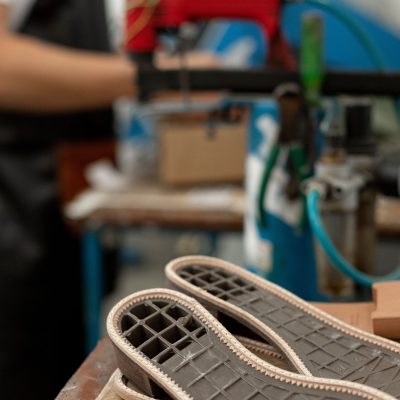
Here is the part the industry should pay attention to. Groupe Lecuyer is not a fund looking for a turnaround multiple. It is a French luxury group with manufacturing depth, and its stated plan is to strengthen Moreau’s industrial capabilities, product development and international distribution while preserving the brand’s identity and craftsmanship.
The company was explicit that its French manufacturing expertise will complement Moreau’s established Italian production — bringing together Italian leather craftsmanship with French luxury manufacturing know-how.
That sentence is the whole thesis. Moreau’s problem was almost certainly never desirability; it was the cost and fragility of making beautiful things at €10 million scale without owning the workshop. A brand that size cannot command priority at a top Italian façonnier, cannot easily fund tooling for new product families, and cannot absorb the working capital swings that leather goods demand. Attach it to a group that already runs French ateliers, and the arithmetic changes overnight.
We have argued in this space before that the real scarcity in European leather goods is not brands — it is capacity. Every luxury group from LVMH to Chanel to Richemont has spent the past three years buying, building or bailing out workshops in Tuscany, Scandicci, Catalonia and the French regions. Moreau is the mirror image of that trend: a manufacturer acquiring a brand rather than a brand acquiring a manufacturer.
The Distressed-Heritage Window Is Open
There is a broader signal here about market conditions. Court-supervised sales of respectable European leather goods names do not happen in booming markets. They happen when working capital tightens, wholesale orders soften, and mid-sized independents run out of runway between collections.
The luxury slowdown of the past two years has been unevenly distributed. Hermès posts solid halves. Kering claws back to growth. Meanwhile the €5–30 million independents — the ones with real heritage and no balance sheet — quietly hit the wall. Expect more of these deals, not fewer, over the next eighteen months.
For buyers with manufacturing assets, that is an opportunity rather than a tragedy. Acquiring a 144-year-old monogram house with proven Japanese traction for a distressed price, and then feeding it into workshops you already run at partial capacity, is close to the ideal use of industrial infrastructure in a soft cycle.
What to Watch
Two things will tell us whether this works. First, whether Groupe Lecuyer resists the temptation to over-expand distribution too quickly — the mistake that has broken more revived heritage brands than any design failure. Second, whether the Franco-Italian production split becomes a genuine advantage or a coordination headache. Splitting a small brand’s output across two countries’ craft traditions is romantic in a press release and expensive in practice.
Moreau has survived 144 years, two ownership exits and a judicial restructuring. It now has, for the first time in a long time, an owner whose core competence is making things rather than marketing them. That may be exactly what it needed.
Source: Leather News